Food Systems Residency

The Role of History, Society and Economics in Shaping Food and Farming

Challenges and possibilities in the path to just food systems

What shapes our food systems, and who really pays the price?
What happens when corporate capital and geopolitics begin to control our food systems? 
Who bears the real cost of our dominant agri-food model? 
How can local action reshape the pathway towards a just and sustainable food future?

The Food Systems Residency (FSR), Agrendia Association’s first flagship programme, delved into these questions and more to find alternatives to hegemonic ideologies and models that govern our food systems.

About the Residency

Our food systems are a complex interconnection of people, history, ecology, technology, markets, institutions, structures, and processes. How and what food is grown, processed, distributed, and consumed reveals the interrelations, politics, and structures that underpin these systems. Food systems are, thus, an entry point for examining the larger forces that shape our society.

As dominant agri-food models and ideologies govern discourses in academic and policy circles, how can we reframe the conversation to prepare for the crises embroiling our contemporary food systems?

Agrendia Association’s first flagship programme, the Food Systems Residency (FSR), was built on the promise of holding a mirror to the realities of our contemporary times and engaging a multidisciplinary, multi-sectoral lens to explore the future possibilities and challenges of transitions to just food systems. The 4-day residency in Sitapur, Uttar Pradesh, from 8-11th October 2026, probed past and present processes, structures and ideologies to re-envision our food futures.

About Sitapur

Source: District Census Handbook Sitapur (2011), published by Directorate of Census Operations, Uttar Pradesh, Lucknow.

Located in the fertile upper Gangetic plains, Sitapur district in Uttar Pradesh encapsulates the story of the transformative power of the Green Revolution and the rise of neoliberal consumerism. Monocultural agri-scapes, a declining culture of animal husbandry, flattened diets and intensified marketisation have become the norm, as documented by research by Sangtin, IIT-Delhi, and Samata Kisaan Majdoor Sangathan (SKMS). Part of western Avadh, Sitapur was historically known for its pulses (black gram, pigeon pea, lentil, gram and groundnuts). Over the past few decades, the region has lost its agricultural diversity to monocultural cropping patterns. Simultaneously, declining agricultural diversity and foraging lands (and knowledge) have affected dietary diversity and nutritional health. The grounded realities of Sitapur’s food systems transformation and farming households’ lived experiences were instrumental in locating the micro-level impacts of meso- and macro-level processes and histories. Sangtin’s strong presence and continued work to build the capacity of marginalised and agrarian communities to organise and take control over more localised food production and consumption provided the foundation to conduct the residency in this district.

Technical Sessions

SESSION 01 OF 08

Decentralised Agri-Food Complexes

The session proposed a tentative alternative principle to address the meta-crises of our contemporary food systems.

Beyond the Classroom - Learning from the Field

Madhuvapur Local Market Visit

On 8th October, the group headed to the local market to explore the local food culture of the area.
Key Takeaways:
Local food cultures have become significantly disconnected from temporality and seasonality.
Local foods or varieties were largely absent from the markets, reflecting declining food diversity.
Discourses around desi, videshi or hybrid are negotiated based on local and practical understanding.

Village Visits

On 10th October, the group visited five villages: Katara and Raunamau in Machhrehta Block, Arthapur and Madhubana in Misrikh Block, and Allipur in Pisawan Block.
Key Takeaways:
Agricultural production and farmers’ decision-making are affected by several micro-, meso- and macro-level factors.
The social structure and fabric of villages differ and continue to affect interactions and socio-economic opportunities, with some traditional hierarchies still intact.
Grassroots collective action can lead to social and economic empowerment. Changing government policies and techno-scientific shifts significantly affect villagers' everyday lives.
The climate crisis is a lived reality rather than a future consideration in rural and agrarian life.

Sehat Ka Bardana

The visit to the ‘Sehat ka Bardana’ millet processing unit in Misrikh Block revealed the importance of community ownership of food processing in reviving traditional crops.
Key Takeaways:
Local communities can benefit significantly from community ownership of modes of production.
Gender equality through economic opportunities benefits the local community.
Establishment of localised production and consumption can help revive declining traditional food cultures and add to nutritional diversity.

Neighbourhood Foraging

Dr Kiranmayi Bhushi led the participants on an immersive walk in search of ingredients for dinner. The neighbourhood foraging led to a bounty of antioxidant-rich wood sorrel, and a treasure trove from the homestead nurtured at SuryaChaya – unripe banana, ajwain leaves, and flowers from the turai plant.
Key Takeaways:
Our surroundings are rich in forageable greens.
The knowledge systems and skills of foraging are in decline.
Overlooked commons can be a source of dietary and nutritional diversity.

Meet Our Facilitators

Dr. A.R. Vasavi

Social Anthropologist and Trustee, Punarchith
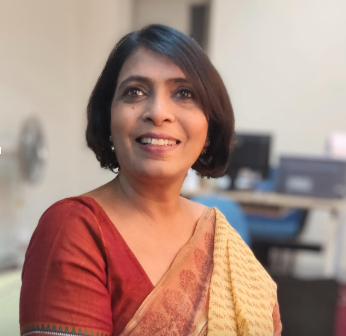
A.R.Vasavi is an eminent Social Anthropologist with extensive experience in research on alternative education, rural and agrarian studies, sociology of education, sociology of India, and contemporary social theory. She has made significant contributions to understanding rural societies, agrarian transitions and changes, and livelihood issues. She is presently with the Punarchith Collective in Karnataka.

Dr. Kiranmayi Bhushi

Faculty Member, SOSS, IGNOU, New Delhi

Kiranmayi Bhushi is a distinguished Sociologist and Professor of Sociology at Indira Gandhi National Open University, New Delhi. Her research encompasses globalization, consumption, media-mediated culture, transnationalism and diaspora, ethnography and anthropology of food and eating. She is a food enthusiast and an avid photographer.

Dr. Richa Kumar

Associate Professor, Humanities and Social Sciences (HSS), IIT-Delhi

Richa Kumar is a distinguished Sociologist and Associate Professor in the Department of Humanities and Social Sciences, IIT-Delhi. Her work intricately and critically examines the intersections between agriculture, food, the environment, human health, society, and technology.

Sudha Nagavarapu

Independent Consultant, Agriculture and Livelihoods Interventions

Sudha Nagavarapu supports grassroots organizations in India with the design and implementation of interventions in agriculture, livelihoods, food and health. She has worked on community-driven, collaborative research into maternal health, health systems, neglected diseases and food cultures.

Dr. Sanchita Das

Founder, The Bihun Collective

Sanchita Das is a social scientist whose work spans the intersections of livelihood vulnerability, local knowledge systems, agrarian transitions and critical food studies. She is the founder of Bihun Collective and the editor of an e-journal, 'Journal of Contemporary Food Studies'.

Aparna Pallavi

Writer, Journalist & Researcher
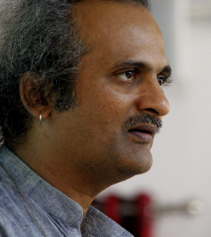
Aparna Pallavi is a writer, journalist and researcher with over 25 years of experience who has written extensively on indigenous food systems, forest rights, displacement, environmental governance, agricultural crisis in Central India, urban water scarcity, and land-use conflicts.

Dr. Dwijendra Nath Guru

Advocate, Consultant and Activist, Sustainable Food Systems and Appropriate Technology
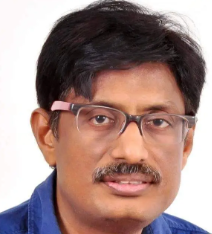
Dwijendra Nath Guru is an advocate, consultant & activist for sustainable food systems and appropriate technology. He draws on his extensive knowledge & cross-sectoral experience to help identify and develop solutions for people, process, machine and product challenges in real-world situations. He has been a vocal proponent of, and helped set up in different parts of the country multiple, community oriented small millet processing initiatives - taking a holistic approach to meet the nutritional, financial, farm health and social needs and aspirations of the community. He has a Ph.D in Mechanical Engineering from the University of Minnesota and has been associated with various social justice and development initiatives for more than two decades.

Dr. G. V. Ramanjaneyulu

Executive Director, Centre for Sustainable Agriculture (CSA) & Grameen Academy
Dr. G. V. Ramanjaneyulu is the Executive Director of the Centre for Sustainable Agriculture (CSA) and the Grameen Academy. He was trained as an agricultural scientist (PhD, IARI) and has worked with ICAR's Directorate of Oilseeds Research before founding CSA in 2004. Over the last two decades, he has worked on building food systems where farmer knowledge, farmer institutions, and farmer economics sit at the centre — not at the margins. He has led numerous agroecology and natural farming programmes in collaboration with state governments, farmer collectives, universities, philanthropic foundations, and international agencies through CSA, to scale low-input, high-return farming. He has written extensively on agricultural policy, FPO economics, soil and fertiliser policy, and the epistemology of farmer knowledge; and has appeared in 6 TEDx talks, on the show Satyamev Jayate, and films including Mitti – Back to Roots.

Who should join us?

• Professionals and activists working at the grassroots in food systems initiatives and interventions.
• Researchers and academicians interested in critically engaging with food systems.
• Practitioners and members of collectives/organisations engaged in food production and/or experimenting with different farming alternatives.
• Anyone interested in gaining an in-depth understanding of our food systems.

About the Organisers

Sangtin is a grassroots NGO working with 10,000+ female and male farmer-labourers and rural youth in Sitapur, Hardoi and Lakhimpur-Kheri districts of Uttar Pradesh. It supports rural communities in their quest for a life with dignity, and operates in a culture of collective learning and knowledge sharing (seekhne-sikhaane ki prakriya). Sangtin has supported thousands of farmer-labourers to successfully obtain work and wages under MGNREGA since the scheme’s inception, and to access various social security schemes and government benefits. Its millet initiative has led to hundreds of farmers adopting millet-based mixed cropping and the local processing and consumption of indigenous millets. Sangtin organises activities for rural youth and helps them improve their knowledge, skills and confidence.

Agrendia Association was established in 2016 with a mission to empower individuals and collectives through research, story-telling, leadership-building and immersive learning. The Bihun Collective emerged as an initiative of the organisation to critically engage with and examine the contemporary food system. It has developed a multilingual digital repository to document socio-cultural and historical food realities. The initiative’s primary objective is to foster cross-regional and multilingual discourse on the food system through dialogue, advocacy and research. It has organised several workshops, discussions, and capacity-building to encourage research on critical food studies. The Journal of Contemporary Food Studies was launched in 2025 to provide a platform for voices that critically examine the contemporary food system.

Testimonials

“What made the residency special was this combination of intellectual engagement, field-based learning, food, conversations and collective experiences. I returned with new knowledge, fresh perspectives and several questions to think about. Most importantly, it reminded me that understanding food systems requires us to look beyond agriculture and pay attention to the histories, relationships, inequalities, markets and cultures that shape what we grow, trade, buy, eat and value.”
Rashmi
Researcher & Agroecology Practitioner, Delhi
“The residency was a rewarding and thought-provoking experience. Its guiding principle, that the community leads and external expertise supports, reinforced how I approach programme design. The examples from Sitapur, Chhattisgarh and Andhra Pradesh showed that steady, farmer-led transitions can work. I took away practical ideas on FPOs, knowledge banks, flexible adoption of practices and village-level enterprises.”
Deepa
Programme Design, Implementation & Evaluation Specialist, Karnataka

To hear more from our participants, click the link.

Last date for Application: Application Closed

Location:

How to Reach:

How to Reach:

Nearest:

Airport – Chaudhary Charan Singh International Airport, Lucknow (116 km)

Lucknow City Stations – Lucknow Jn. Gomati Nagar, Badshahnagar (90 km)

Railway Station – Sitapur Jn. (3 km.)

Sitapur City Jn. (6.5 km)

Lucknow to Sitapur Trains –

Vande Bharat Exp – Daliganj (DAL) to Sitapur (STP)

Ash Ksj Express – Aishbagh (ASH) to Sitapur (STP)

Gkp Izn Exp – Daliganj (DAL) to Sitapur (STP)

Bus Station – Sitapur Bus Station (3.3 km)

Local Transport – E-Rickshaws are available for local conveyance.

Last date for Application: 30th August 2026

For more information and queries, contact